Since the 2020-21 school year, Channel Islands High School has utilized the quarter system to organize students’ schedules. For the past several school years, concerns have been brought up regarding the scheduling system by both teachers and students regarding various issues the schedule creates for students.
As most students here at CI know, a quarter system divides the academic school year into four 10-week terms: Fall, Winter, Spring, and Summer. Currently, students take 3-4 classes a day, with an available dismissal period if their schedule allows. Class periods are for 90 minutes, with Friday late start classes when scheduled having 64 minute class periods.
A semester system, on the other hand, is divided into two terms- Fall and Spring. Classes last for 15-16 weeks, often with a Summer session as an option. The semester system would allow students to take more classes each semester, but have less electives available to their schedules.
Additionally, semesters have approximately 56 minutes to class periods. Due to the length of the semester schedule, teachers have more time with students for instruction and practice.
Assistant Principal Wendi Butler, who in recent years has been in charge of the schedule of classes offered during the school year, acknowledged that there are benefits to both schedule systems.
“I know that semesters will make it more difficult for a kid who’s in ASB or doing squads to be in that program for four years,” Butler said. “I think that the semester system is much better for the AP student who has its classes all year, for sure.”
Regarding the current quarter system, Butler added that the quarter system schedule allows students to, “have the maximum of four academic classes at a time, so their homework-load is less because there’s less stuff to manage.”
“There’s less pressure unless students are in all four academic solid classes,” said Butler. “It’s no different than the semester system.”
A survey was sent out to classes this week to find out how students at CI feel about the current quarter system. In the span of three days, 201 responses were collected anonymously, with students being asked to only provide their current grade level as well as having the opportunity to give feedback regarding their current schedule and thoughts on being introduced to a semester system next school year.
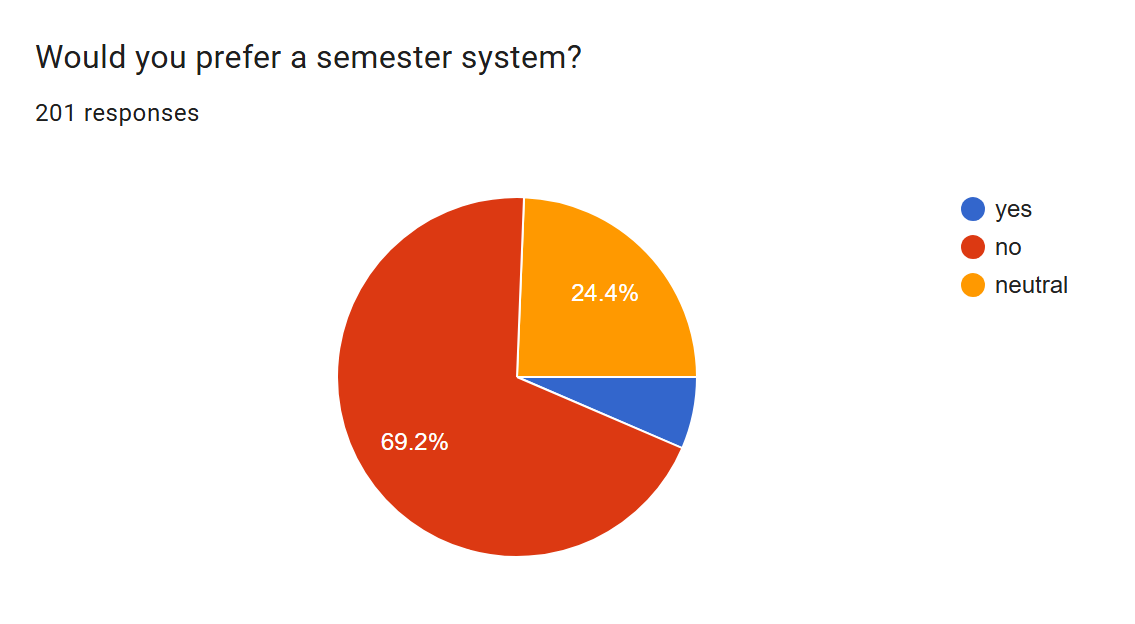
The collective consensus was that most students on campus prefer the quarter system over a semester system, with over 83.1% of all respondents answering “yes” to the question “Do you like the Quarter system?”. 69.2% of respondents answered “no” to the question “Would you prefer a semester system?”. Only 6.5% said they would prefer a semester system, and 24.4% said they felt neutral about the hypothetical change to a semester system from the current quarter system.

An anonymous sophomore student responded, “I do not like the semester system because back in middle school when I did have it, it was a lot more overwhelming and stressful because I had to do more homework than usual; and also we had about 3 tests from each class every other week.”
Another anonymous sophomore added, “I like the quarter system because it rotates the classes so I can meet my graduation requirements while not having to have 6-7 classes for the whole year.”
As for the 6.5% that preferred a semester system, a shared belief was echoed in their feedback that semester systems are better for remembering details from each class due to the lack of pauses between quarters and helping foster a better connection between teachers and students.
An anonymous freshmen student said, “It [quarter system] feels slower. I experienced it at my middle school and I did not like it at all.” They continued, “It felt rushed and my mind couldn’t remember all the topics we learned.”
Regarding grades for courses, an anonymous sophomore said a semester system would, “Give more time to get grades up and not feel rushed with so much work
everyday. I think that shorter classes would help us concentrate more as well.”
As a consensus, the biggest concern students have is how they would adjust if their schedule was changed to a semester system. One anonymous student pointed out that many students, “already have a busy schedule outside of school like a part-time job, sports, clubs, or some other extracurricular activities.”
“If we were to change to a semester system, then students would have a hard time adjusting to the new scheduling system,” the anonymous junior said.
At the same time, many students who want to take extra classes, like Mock Trial or Academic Decathlon currently offered during zero period, are currently able to do so under the quarter system. At the moment, according to Butler, there are about 229 students that have 16 classes with no dismissals throughout the year and 51 students with more than 16 classes.
“Students are capable of far more than they think they are,” said Butler. “Everyone would adjust.”
The topic of the removal of the current dismissal period available to students in the quarter system was brought up as a concern by the consensus of the student survey responders, as one anonymous sophomore said, “dismissal helps me keep up with all the classwork with a longer amount of time to focus on it during periods.”
Despite the concerns expressed by students regarding a potential schedule change next school year, Butler expressed her faith in students and believes that everyone would be able to adjust if the schedule system were to change.
“Students would have to learn how to manage multiple classes at once, and they should, because that will happen in college,” said Butler.